CM CookMio
High-Protein Breakfast: 30g+ Ideas That Actually Keep You Full

High-Protein Breakfast: 30g+ Ideas That Actually Keep You Full

Link copied!
2026-06-07 · 10 min read · Alex Chen

Why 30g of Protein at Breakfast Is the Magic Number
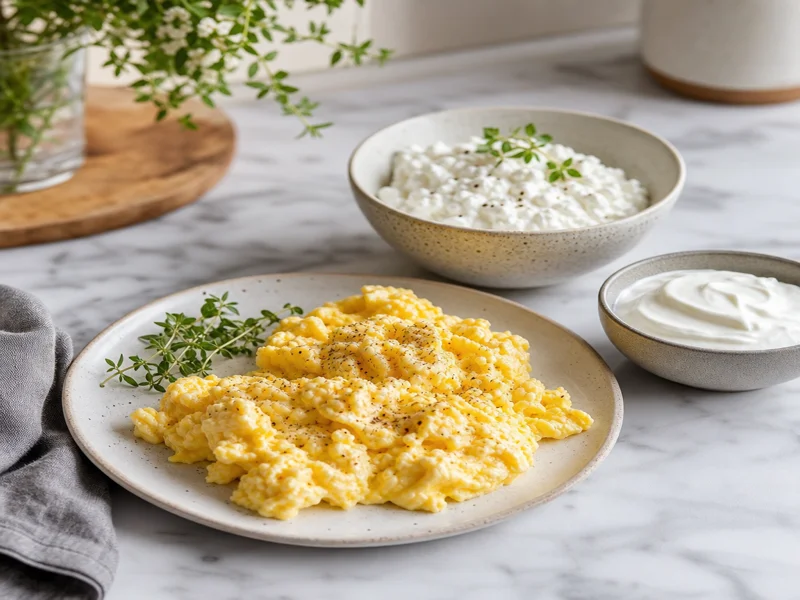
Plate of scrambled eggs, Greek yogurt and cottage cheese arranged as a high-protein breakfast spread
If you've been eating a bowl of oatmeal or a slice of toast for breakfast and wondering why you're ravenous by 10:30 AM, the answer is almost always protein. Research from the University of Texas Medical Branch found that **30 grams of protein per meal** is the threshold that maximally stimulates muscle protein synthesis (MPS) — the process your body uses to repair and build muscle. Below that, you get a partial response. Above it, you don't get much extra benefit at that single meal. A 2015 study in the Journal of Nutrition showed that people who ate 30g of protein at breakfast had **better appetite control all day**, consumed fewer late-night snacks, and reported feeling fuller longer than those who got the same protein spread unevenly (mostly at dinner). **The real-world translation:** - A typical American breakfast averages only 10-15g protein (cereal + milk, bagel + cream cheese) - That's why you're crashing at 10 AM - Hitting 30g doesn't require protein powder or weird supplements — just rethinking what goes on your plate. **Why this matters more as you age:** After age 30, you lose 3-8% of muscle mass per decade. Front-loading protein at breakfast helps preserve muscle, which keeps metabolism higher and reduces fall risk later in life. The American College of Sports Medicine recommends adults aim for **0.7-1.0g of protein per pound of bodyweight daily**, distributed across 3-4 meals.

The Science: Why Protein Beats Carbs for Morning Energy
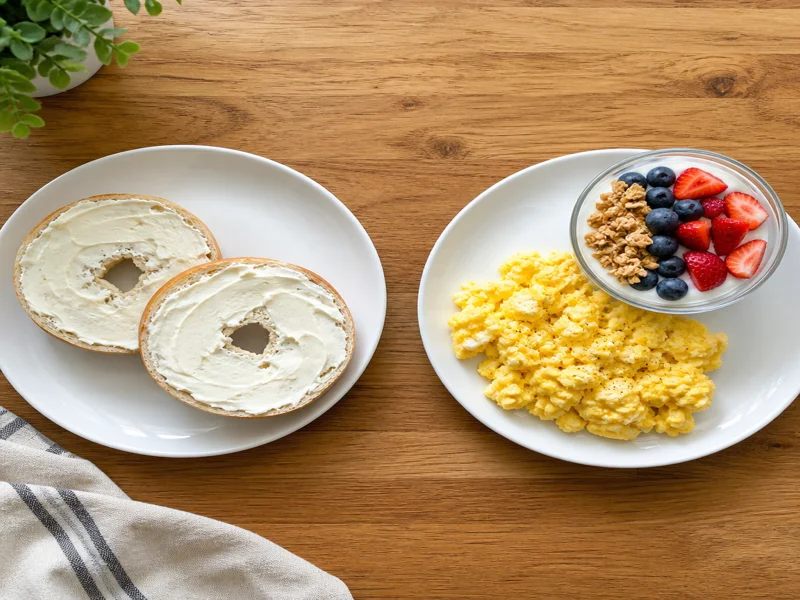
Side-by-side breakfast comparison: bagel on one plate, eggs and yogurt on the other
Carbs aren't the enemy — but at breakfast, they're working against you. **The blood sugar problem:** A high-carb breakfast (bagel, cereal, pastry) causes a rapid blood glucose spike, followed by an insulin surge, followed by a crash within 90-120 minutes. That crash is what you feel as "I need a snack RIGHT NOW" at 10 AM. A 2018 study in the American Journal of Clinical Nutrition compared two breakfasts of identical calories: one high-carb (oatmeal + fruit), one high-protein (eggs + Greek yogurt). The high-protein group showed: - **65% lower hunger** at the 3-hour mark - **24% less calorie intake** at lunch - More stable blood glucose throughout the morning **The thermic effect bonus:** Your body burns more calories digesting protein than carbs or fat. Protein has a **20-30% thermic effect** (you burn 20-30 calories digesting every 100 calories of protein), versus 5-10% for carbs and 0-3% for fat. A 30g protein breakfast effectively "costs" 30-45 fewer net calories than a carb-equivalent meal. **Satiety hormones:** Protein triggers the release of peptide YY and GLP-1 — the same hormones targeted by weight-loss drugs like Ozempic. You're getting a smaller, natural version of that satiety signal every time you eat enough protein. The USDA Dietary Guidelines now recommend that adults distribute protein evenly across meals rather than loading it at dinner, specifically because of these morning energy and satiety benefits.

8 High-Protein Breakfasts (With Real Macros)
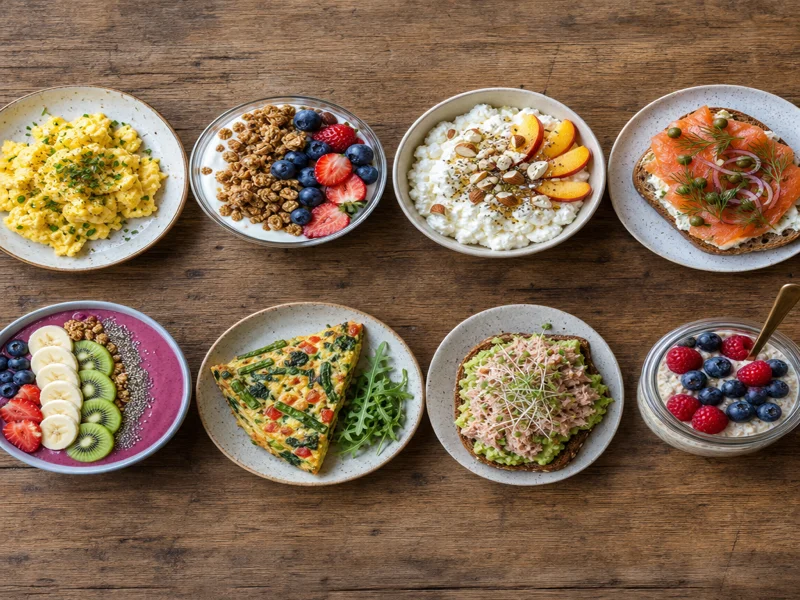
Eight high-protein breakfast bowls and plates arranged in a grid on a wooden table
Here are 8 breakfasts I rotate through, with actual protein content. None require fancy equipment or more than 10 minutes. **1. The Classic Power Plate — 38g protein** - 3 scrambled eggs (18g) + 1 slice whole grain toast (4g) + 1 cup cottage cheese (14g) + berries - 5 minutes, ~420 calories **2. Greek Yogurt Parfait — 32g protein** - 1 cup nonfat Greek yogurt (23g) + ¼ cup granola (4g) + 1 tbsp chia seeds (3g) + 2 tbsp almonds (3g) + berries - 3 minutes, no cooking, ~380 calories - Try our [Greek Yogurt Parfait with Berries & Granola](/en/recipes/greek-yogurt-parfait) recipe **3. Cottage Cheese Bowl — 31g protein** - 1.5 cups low-fat cottage cheese (28g) + ½ banana sliced + 1 tbsp peanut butter (4g) + cinnamon - 2 minutes, ~340 calories **4. Smoked Salmon Toast — 30g protein** - 3 oz smoked salmon (17g) + 2 slices whole grain toast (8g) + 2 tbsp cottage cheese (3g) + capers + dill + 1 boiled egg on side (6g) - 5 minutes, ~380 calories **5. Protein Smoothie Bowl — 35g protein** - 1 scoop whey protein (24g) + ¾ cup Greek yogurt (17g) + ½ banana + ½ cup berries + spinach + almond milk; top with hemp hearts (3g) - 4 minutes, ~380 calories **6. Vegetable Frittata Slice — 32g protein** - 1 large slice of our [Vegetable Frittata](/en/recipes/vegetable-frittata) (22g) + ½ cup Greek yogurt (10g) on side - Make Sunday, eat Mon-Wed, ~310 calories per slice **7. Tuna Avocado Toast — 33g protein** - 1 can (5 oz) light tuna (27g) + ½ avocado mashed + 2 slices whole grain toast (8g) + lemon + everything bagel seasoning - 4 minutes, ~430 calories - Yes, tuna for breakfast — it's normal in Mediterranean cultures **8. Overnight Egg-White Oats — 30g protein** - Cook ½ cup oats with milk; while warm, stir in ¼ cup egg whites (6g) + 1 scoop protein powder (24g); refrigerate. Top with berries and nuts in the morning. - 5 min prep night before, 0 min morning, ~390 calories - Variation on our [Overnight Oats](/en/recipes/overnight-oats) recipe **Pattern recognition:** Every meal combines a 20-25g main protein source with a 5-10g booster (eggs, nuts, seeds, or cottage cheese). That's the formula — pick one anchor protein, add one booster, you'll hit 30g almost every time.

Best Protein Sources for Breakfast (Ranked by Convenience)
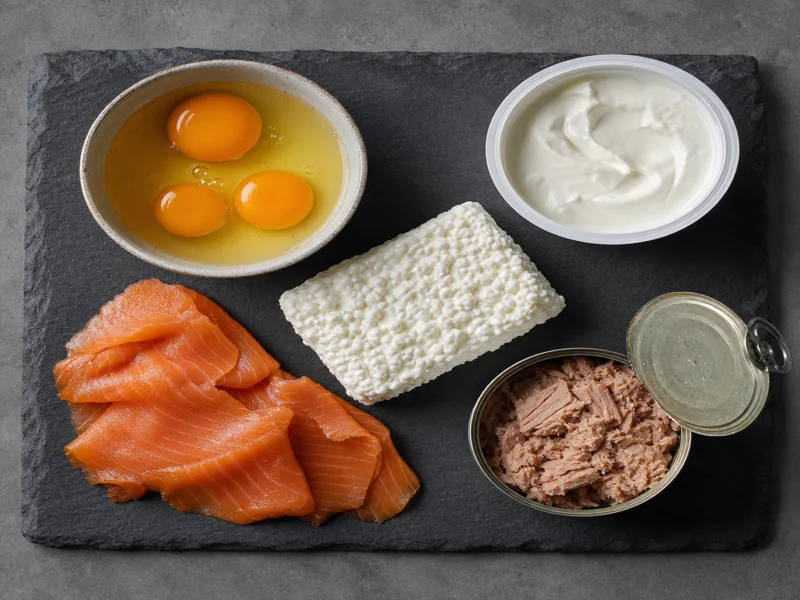
Top-down view of protein sources: eggs, Greek yogurt, cottage cheese, smoked salmon, and tuna
Not all protein sources are created equal at 7 AM. Here's my honest ranking based on protein density, prep time, and how often I actually use them. **Tier 1 — Use These Every Day:** - **Eggs:** 6g per large egg. Cheap, cooks in 3 minutes, complete amino acid profile. The breakfast workhorse. - **Greek yogurt (nonfat plain):** 17-23g per cup. Zero prep, high satiety, contains probiotics. Buy plain — flavored versions add 15-20g sugar. - **Cottage cheese (low-fat):** 14g per ½ cup, 28g per cup. Underrated. Mix with fruit (sweet) or salt + tomato (savory). Cheaper than Greek yogurt. **Tier 2 — Great When You Have 5 Minutes:** - **Smoked salmon:** 17g per 3 oz. Omega-3s included. No cooking required. - **Canned tuna:** 27g per 5 oz can. Cheapest protein per gram. Buy in water, not oil. - **Whey/plant protein powder:** 20-25g per scoop. Mix in smoothies, oats, yogurt, or coffee. **Tier 3 — Solid Boosters:** - **Hemp hearts:** 10g per 3 tbsp. Sprinkle on anything. - **Chia seeds:** 5g per 2 tbsp. Better for fiber than protein. - **Nut butter:** 7-8g per 2 tbsp. Watch portions — calories add up fast. - **Pre-cooked chicken sausage:** 12-15g per link. Reheat in 60 seconds. **Tier 4 — Limited Use:** - **Bacon:** Only 3g per slice — it's mostly fat. Use as flavor, not protein. - **Bread/cereal "high-protein" versions:** Usually still only 8-12g per serving. Marketing > substance. **The protein label trick:** Look at protein-to-calorie ratio. Anything above **10g protein per 100 calories** is genuinely high-protein. Below that, you're paying mostly for carbs or fat.

Common Mistakes That Sabotage Your High-Protein Breakfast
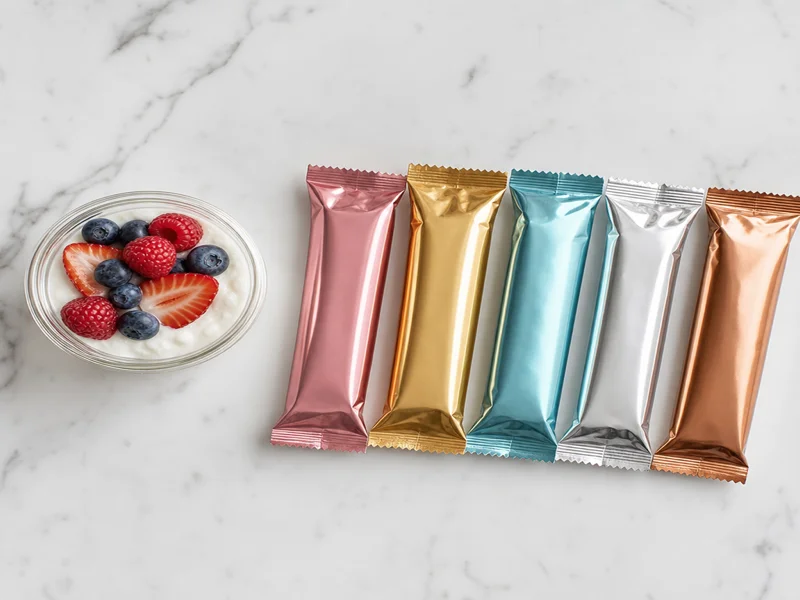
Comparison of misleading protein bars with high sugar content next to plain Greek yogurt
I made all of these. Avoid them and you'll get the satiety and energy benefits without the frustration. **Mistake 1: Trusting "protein" marketing.** Protein bars, protein cereals, and protein cookies often have less protein than a plain Greek yogurt — but with 15g of added sugar. Read the actual macros. If a "protein bar" has 10g protein and 18g sugar, it's a candy bar in disguise. **Mistake 2: Counting incomplete proteins as 1:1.** Plant proteins like beans, oats, and nuts are excellent — but they're incomplete (missing some amino acids). To use them as breakfast protein, combine: oats + hemp hearts + Greek yogurt, or peanut butter + whole grain bread. Eggs, dairy, fish, and meat are already complete and don't need combining. (More on this in our [Complete Protein guide](/en/articles/complete-protein-what-it-is-and-why-it-matters).) **Mistake 3: Skipping the carbs entirely.** You need some carbs at breakfast for brain function and to spare protein for muscle repair. Aim for **30g protein + 30-50g complex carbs**. All-protein breakfasts work for keto, but they're harder to sustain long-term. **Mistake 4: Eating flavored Greek yogurt.** A "fruit on the bottom" yogurt cup has 15-20g of added sugar — that's like adding 4 teaspoons of sugar to plain yogurt. Buy plain nonfat Greek yogurt and add your own berries + a drizzle of honey (5g sugar). Same flavor, half the sugar, more protein. **Mistake 5: Drinking your protein in juice form.** Protein smoothies are great if you're short on time, but blending breaks down fiber and reduces satiety. A chewed meal keeps you fuller than the same calories blended. Use smoothies for convenience, not as your default. **Mistake 6: Loading up on processed meats.** Bacon and sausage are fine occasionally, but eating processed meats daily is linked to increased colorectal cancer risk by the WHO. Rotate them with eggs, dairy, fish, or plant sources rather than making them the daily anchor.

Meal Prep: Hit 30g Protein All Week in 30 Minutes
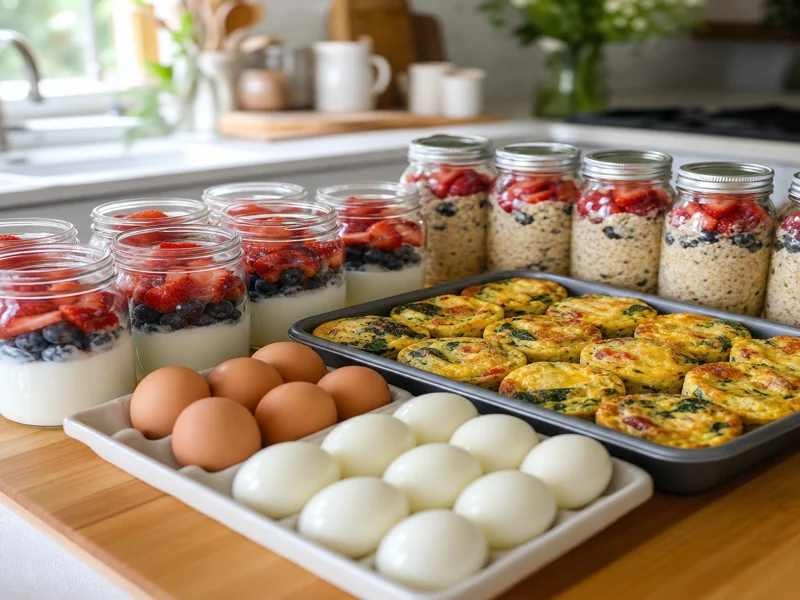
Sunday meal prep spread: hard-boiled eggs, egg muffins, Greek yogurt jars and overnight oats
The real reason most people don't eat enough protein at breakfast isn't knowledge — it's time. Here's a 30-minute Sunday prep that sets up 5 high-protein breakfasts. **Sunday prep checklist (30 minutes total):** **Step 1 — Hard boil a dozen eggs (12 min, mostly hands-off):** Place eggs in cold water, bring to a boil, cover, remove from heat, wait 10 minutes, transfer to ice bath. They keep 7 days refrigerated. Grab 2-3 in the morning = 12-18g protein instantly. **Step 2 — Bake a frittata or egg muffins (20 min, hands-off):** Whisk 8 eggs + 1 cup cottage cheese + diced vegetables + cheese. Pour into a greased muffin tin, bake at 375°F (190°C) for 20 minutes. Makes 12 muffins at ~7g protein each. Eat 3 = 21g protein. **Step 3 — Portion Greek yogurt cups (3 min):** Divide a 32 oz tub of plain Greek yogurt into 5 mason jars. Add berries + granola in the morning so it doesn't get soggy. **Step 4 — Make overnight oats jars (5 min):** In 3 jars: combine ½ cup oats + ¾ cup milk + 1 scoop protein powder + 1 tbsp chia seeds. Refrigerate. Ready Mon/Wed/Fri. **Weekly breakfast plan from this prep:** - **Monday:** Overnight protein oats (30g) - **Tuesday:** 2 egg muffins + Greek yogurt cup (32g) - **Wednesday:** Overnight protein oats (30g) - **Thursday:** 2 hard-boiled eggs + Greek yogurt + nuts (33g) - **Friday:** Overnight protein oats (30g) - **Weekend:** Cook fresh — eggs + cottage cheese bowl or salmon toast **Total active prep time:** ~30 minutes. Total cost: about $25 for 5 breakfasts. That's $5 per breakfast for restaurant-level protein content, with zero morning effort. According to a 2020 study in Public Health Nutrition, people who meal-prepped breakfast were **2.3x more likely** to hit their daily protein target than those who improvised each morning.

Key Takeaways

**The "20+10" anchor rule.** Pick one main protein (20-25g): eggs, Greek yogurt, cottage cheese, smoked salmon. Add one booster (5-10g): nuts, hemp hearts, or extra dairy. Two ingredients, 30g protein, done.

**Buy plain Greek yogurt and add your own fruit.** Flavored cups hide 15-20g added sugar. Plain + fresh berries + a teaspoon of honey gets the same taste with 60% less sugar and more protein per dollar.

**Cottage cheese is the underrated protein king.** A cup of low-fat cottage cheese has 28g protein for about $1 — that's cheaper per gram than chicken breast. Mix with savory or sweet — both work.

**Pre-portion protein on Sunday.** Hard-boiled eggs (12 min), Greek yogurt jars (3 min), egg muffins (20 min hands-off baking). Total 30 min of work = 5 weekday breakfasts you don't have to think about.

**Aim for 10g protein per 100 calories on labels.** That's the real "high-protein" threshold. Most "protein-fortified" cereals and bars fail this test — they're carbs with marketing.

Frequently Asked Questions

How much protein do I really need at breakfast?
Aim for 25-35g, with 30g being the sweet spot for muscle protein synthesis. Below 20g and you won't feel full for long; above 40g doesn't add much benefit at one meal. Spread your total daily protein (0.7-1.0g per pound of bodyweight) across 3-4 meals.
Is 30g of protein too much for breakfast if I'm not trying to build muscle?
No. Even without muscle-building goals, 30g of protein at breakfast improves satiety, stabilizes blood sugar, supports immune function, and helps preserve muscle as you age. It's not just for athletes — it's the threshold that maximizes the meal's benefits for anyone.
Can I hit 30g protein on a plant-based breakfast?
Yes, but you need to combine sources. Try: tofu scramble (10g) + whole grain toast (4g) + ¾ cup soy yogurt (8g) + 2 tbsp hemp hearts (7g) + nuts (2g) = 31g. Or use a plant protein powder (20-25g per scoop) to make it easier. Soy and pea protein are complete; most other plant proteins need combining.
Does protein powder count, or do I need whole foods?
Both count. Whole foods bring vitamins, minerals, and fiber that powders lack — but a protein scoop in oatmeal or yogurt is a perfectly valid way to hit your target on busy mornings. Use whole foods as the base, powder as a booster. Aim for at least 70% of daily protein from whole foods.
Will eating high-protein breakfast help me lose weight?
Indirectly, yes. A 2015 study in the Journal of Nutrition found people eating 30g protein at breakfast consumed 135 fewer calories at lunch and 180 fewer calories at dinner — that's 315 fewer daily calories without trying. Combined with protein's 20-30% thermic effect, it's one of the most effective dietary changes for weight loss.
Are eggs the best breakfast protein?
Eggs are excellent — complete protein, cheap, cooks in 3 minutes, full of choline and vitamin B12. But variety matters. Rotate eggs with Greek yogurt, cottage cheese, fish, and occasionally lean meats. Eating only eggs every day is fine for most people, but mixing sources gives broader nutrient coverage.