Ingredients
Pasta
Cheese Sauce
Crunchy Topping
Enjoy your meal!
Instructions
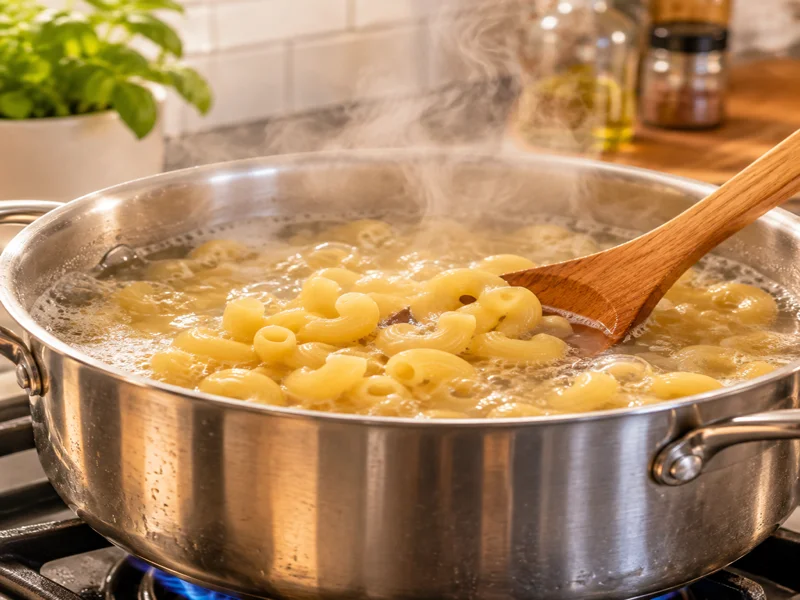
Heat the oven to 375°F (190°C) and butter a 9×13-inch (3 L) baking dish. Boil the macaroni in well-salted water — taste the water; it should be pleasantly salty. Cook 1 minute less than the package direction for al dente, drain, and leave it in the colander. It will finish cooking in the oven.
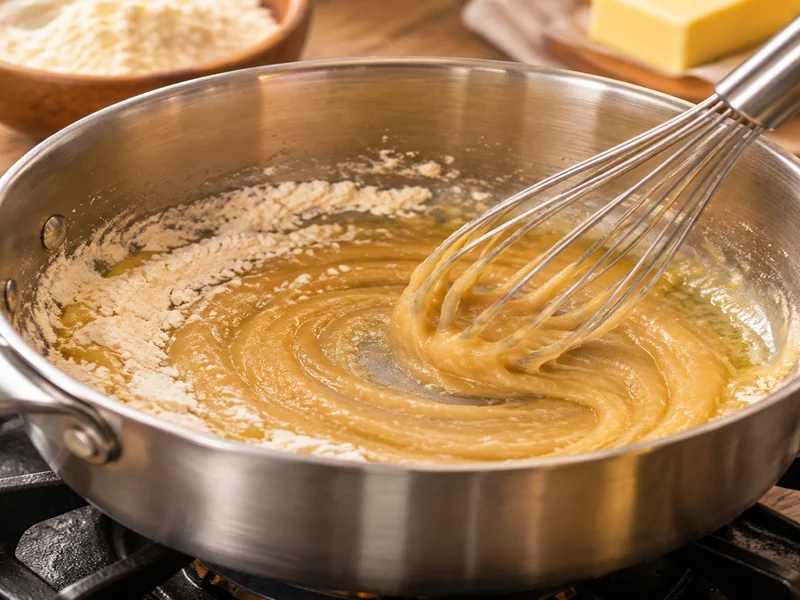
Melt the butter in a large saucepan over medium heat. Whisk in the flour and cook, stirring constantly, for 2 minutes until the mixture smells like fresh biscuits and looks sandy — do not let it brown. This roux is what thickens the sauce without lumps.
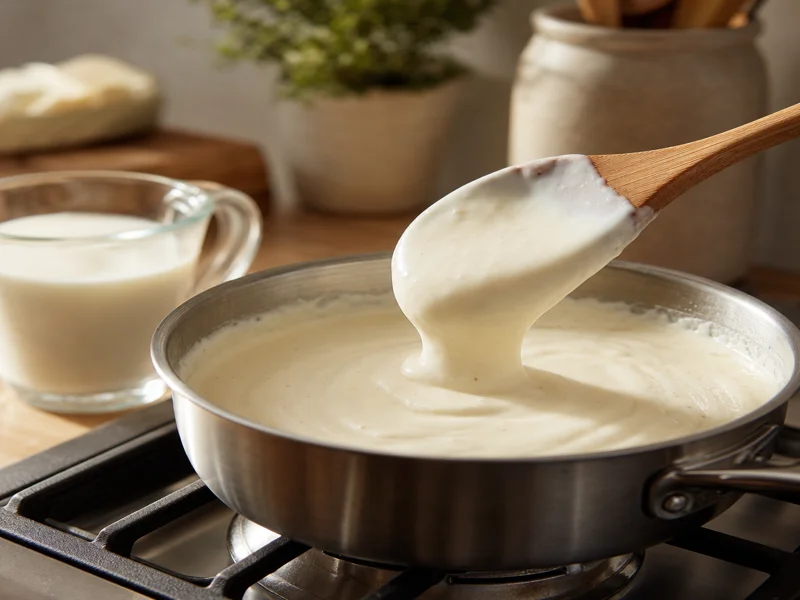
Pour in the warm milk a splash at a time, whisking after each addition until fully smooth before adding more. When all the milk is in, bring the sauce to a bare simmer and cook 3-4 minutes, whisking often, until it thickly coats the back of a spoon. Whisk in the salt, pepper, garlic powder, paprika, nutmeg and Dijon.
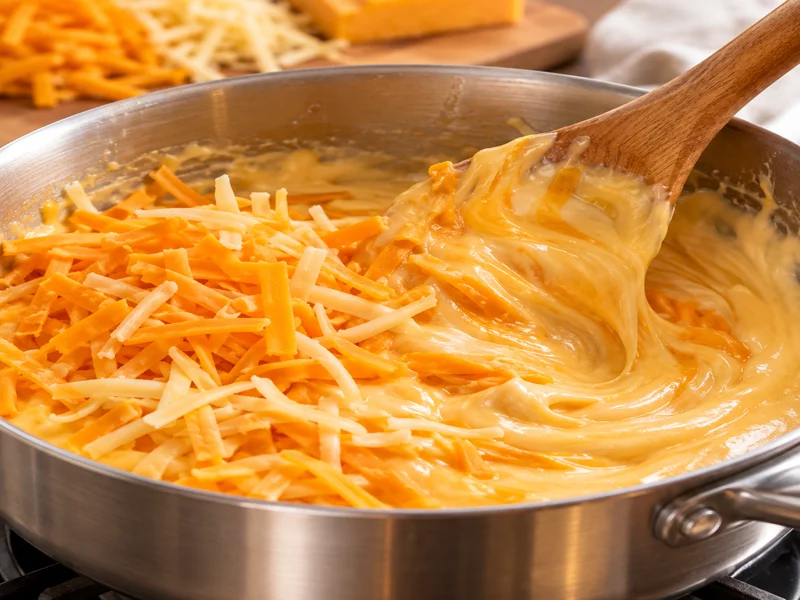
Take the pan off the heat and wait 1 minute — cheese added to boiling sauce turns grainy, so let it cool slightly. Stir in the cream cheese until smooth, then add the cheddar and Gruyère in three batches, waiting until each batch is fully melted before adding the next. The residual heat melts the cheese gently.
Fold the drained macaroni into the cheese sauce. Taste and adjust the salt — the pasta will absorb seasoning as it bakes, so the sauce should taste slightly too salty on its own. Scrape everything into the baking dish and level the surface.
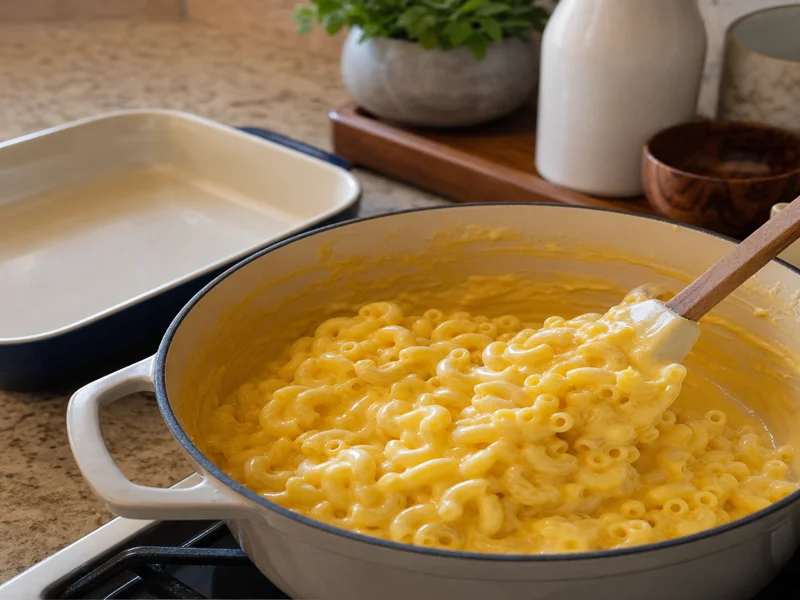
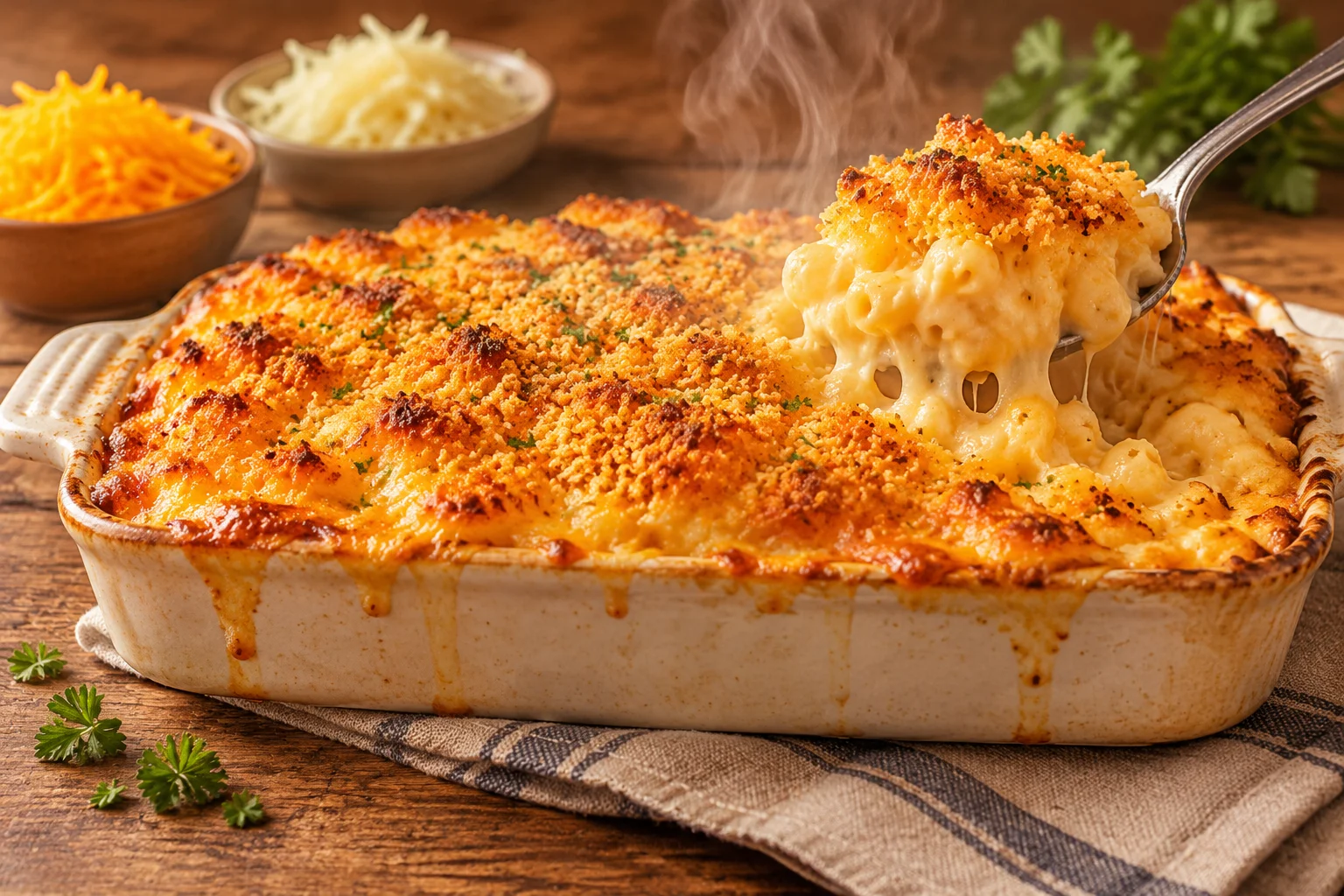
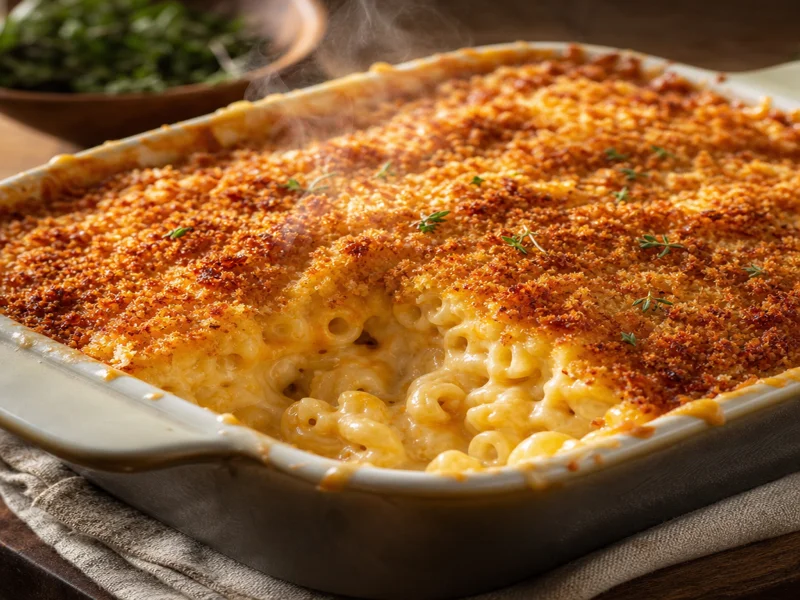
Mix the panko with the Parmesan and melted butter, then sprinkle it evenly over the pasta. Bake for 20-25 minutes until bubbling at the edges, then broil for 1-2 minutes until the top is deep golden. According to the USDA, baked casseroles are done and safe when the center reaches 165°F (74°C) — instant-read thermometer is the reliable check. Rest 10 minutes before serving so the sauce sets.
Personal Tips
- Shred the cheese yourself. Pre-shredded bags are coated in cellulose and potato starch to stop clumping — I ran a side-by-side and the bagged version came out noticeably grainier. Thirty seconds on a box grater buys you a silky sauce.
- Undercook the pasta by a minute. The macaroni keeps absorbing liquid while it bakes, and pasta that goes into the oven already fully soft turns mushy by the time the top crisps. Al dente minus one is the sweet spot I keep coming back to.
- Take the sauce off the heat before adding cheese. Boiled cheese proteins tighten and squeeze out the fat, which is exactly how you get a grainy, oily sauce. Off the heat, in batches, is the fix — the pan stays warm enough to melt everything.
- Warm the milk before adding it. Cold milk hitting a hot roux seizes into lumps that you then chase around the pan for five minutes. A quick 60 seconds in the microwave makes the whole process faster and smoother.
- The 10-minute rest is not optional. Straight from the oven the sauce runs everywhere; a short rest lets the starch and cheese set so each square holds its shape. If assembling ahead, refrigerate unbaked up to 24 hours and add 10 minutes of bake time.
Nutrition (per serving)
Nutrition (per serving): 1 of 8 squares | USDA FoodData Central, calculated estimates
Frequently Asked Questions
What are the best cheeses for baked mac and cheese?
Why did my mac and cheese turn out grainy?
Can I make baked mac and cheese ahead of time?
Can you freeze baked mac and cheese?
What is the difference between baked and stovetop mac and cheese?
Dietary Restrictions
Allergens
Not Suitable For
- Vegans
- People with lactose intolerance (unless modified)
- Anyone with a wheat or milk allergy
Modifications
- Use gluten-free pasta and a 1:1 gluten-free flour blend in the roux for a gluten-free version.
- For a dairy-free version, use unsweetened plant milk, vegan butter and a melting vegan cheese — expect a looser sauce.