Ingredients
Beef Ragu
Béchamel Sauce
Assembly
Enjoy your meal!
Instructions
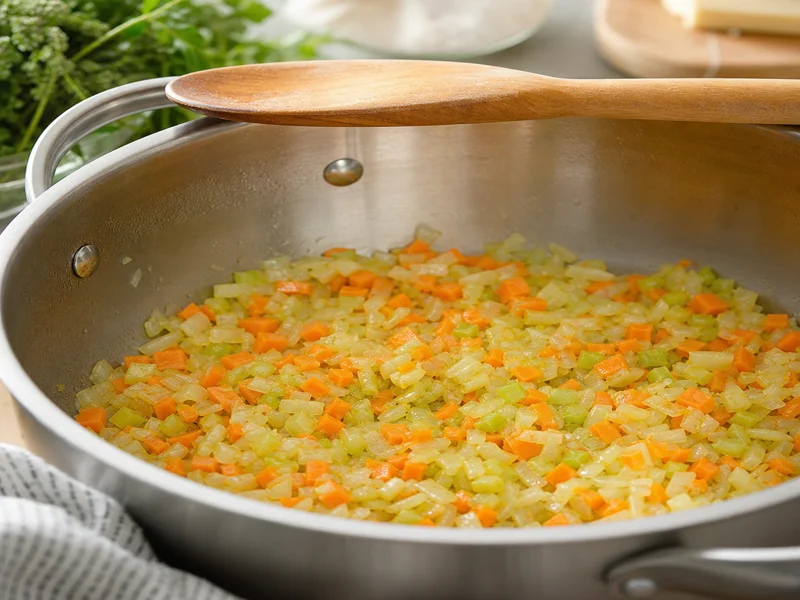
Heat the olive oil in a wide pot over medium heat. Cook the onion, carrot and celery with a pinch of salt for 6-8 minutes until soft and translucent, then add the garlic and cook 1 minute more - this soffritto builds the flavor base of the entire ragu.
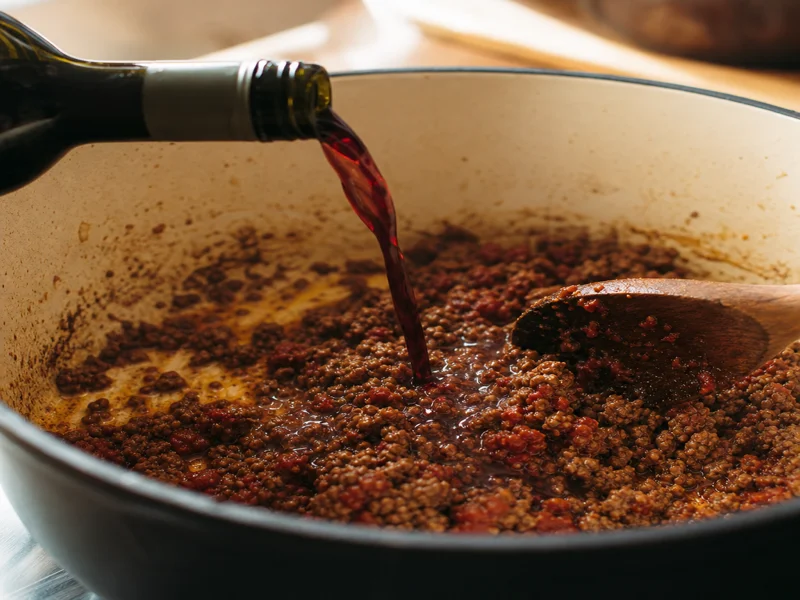
Add the ground beef and brown it well, breaking it up with a spoon, until no pink remains and the bottom of the pot shows browned bits, about 8 minutes. Stir in the tomato paste and cook 1 minute until darkened, then pour in the wine and scrape up every bit of fond.
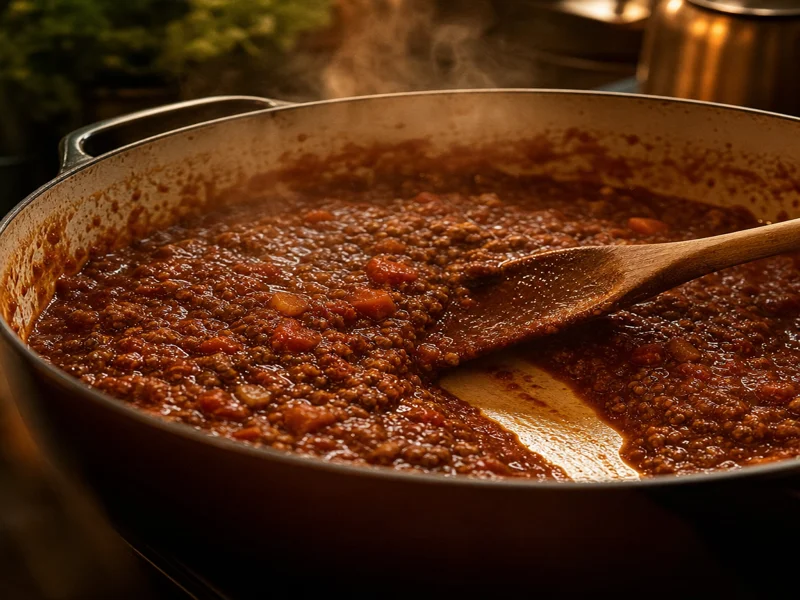
Add the crushed tomatoes, oregano, salt and pepper. Simmer uncovered over low heat for 45 minutes, stirring occasionally, until the sauce is thick enough that a spoon dragged through leaves a clean trail. A loose ragu makes a watery lasagna - do not rush this step.
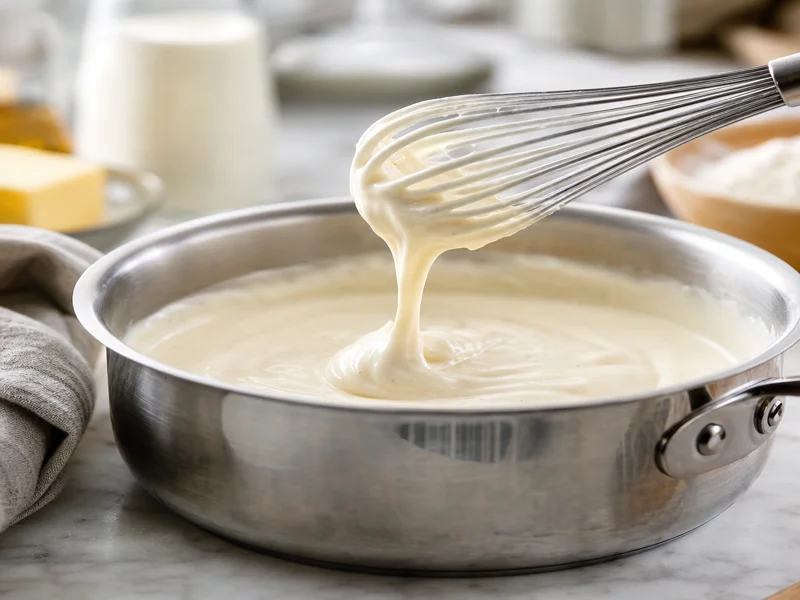
While the ragu simmers, make the béchamel: melt the butter in a saucepan, whisk in the flour and cook 1-2 minutes, then pour in the warm milk in three additions, whisking until smooth after each. Simmer 3-4 minutes until it coats the back of a spoon, then season with salt, nutmeg and parmesan.
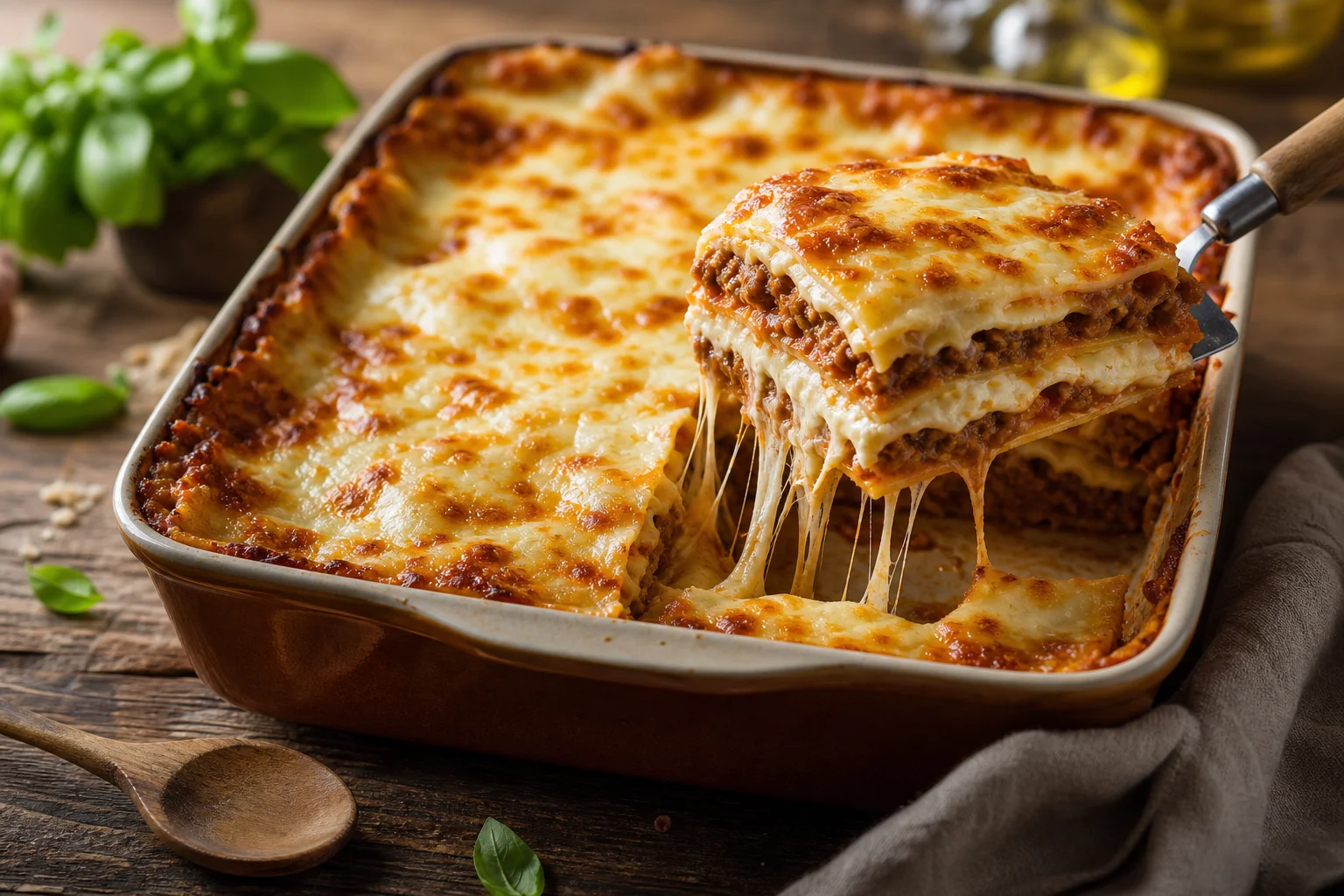
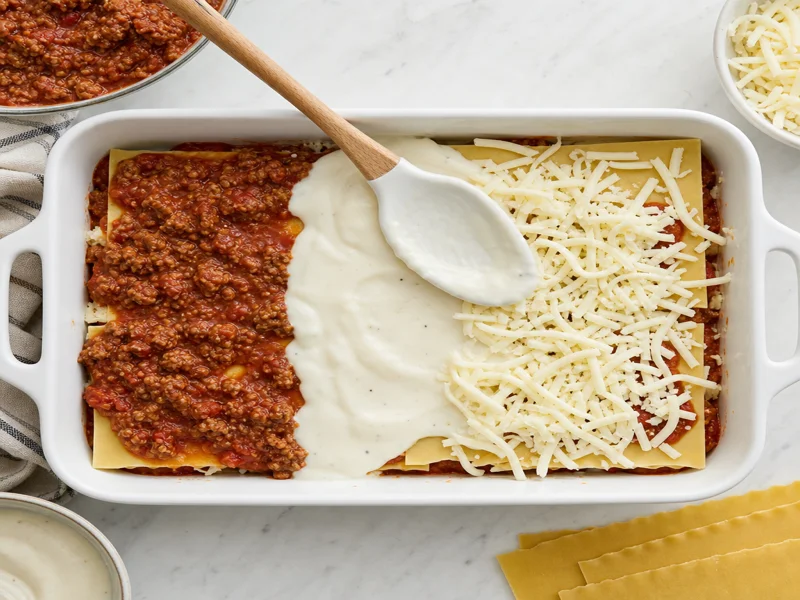
Preheat the oven to 375°F (190°C). Spread ½ cup of ragu in the bottom of a 9x13 inch (23x33 cm) baking dish. Layer lasagna sheets, one-third of the remaining ragu, one-quarter of the béchamel and a handful of mozzarella. Repeat twice more, finishing with a layer of sheets, the last of the béchamel and the remaining mozzarella and parmesan on top.
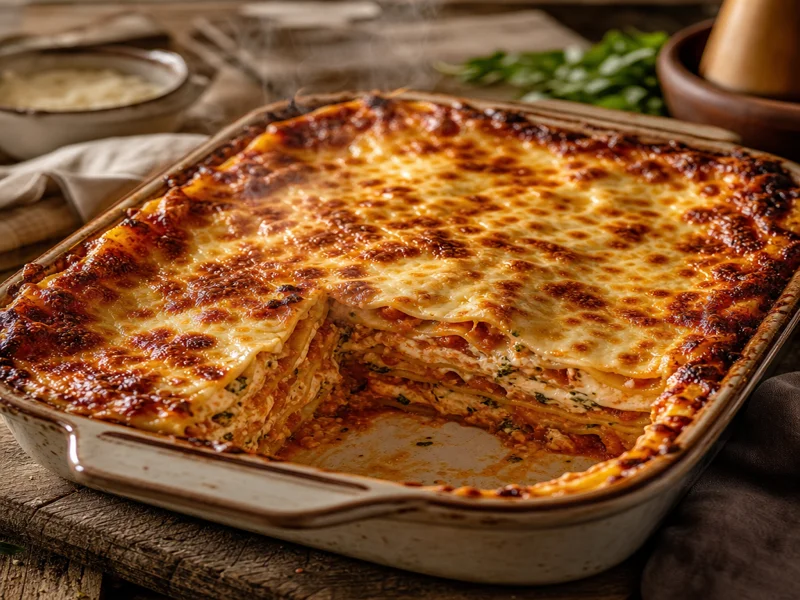
Cover tightly with foil (tent it so it does not touch the cheese) and bake 25 minutes. Uncover and bake 15-20 minutes more until the top is deeply golden and the sauce bubbles at the edges. Rest at least 15 minutes before slicing - the layers set as it rests and cut into clean squares instead of sliding apart.
Personal Tips
- Simmer the ragu until a spoon leaves a clean trail. The single biggest cause of watery lasagna is a loose sauce. The 45-minute simmer concentrates the tomatoes and melds them into the beef - rushing it means excess water bakes out into your layers.
- Use low-moisture mozzarella, never fresh. Fresh mozzarella is roughly 50% water and will flood the dish as it melts. Low-moisture (the firm block kind) melts into stretchy, golden pockets instead.
- Keep it to 3-4 pasta layers. More layers look impressive but collapse under their own weight and cook unevenly. Thin, generous sauce layers between three or four sheets of pasta give you clean squares and even cooking.
- The 15-minute rest is part of the recipe, not optional. Straight from the oven the sauce is boiling and runny. As it rests, the pasta absorbs free moisture and the layers set - slice early and everything slides apart.
- Lasagna is a make-ahead champion. Assemble it up to 24 hours ahead and keep it refrigerated, or freeze the whole unbaked dish for up to 3 months. Bake from cold with an extra 15-20 minutes covered, and it tastes even better reheated the next day.
Nutrition (per serving)
Nutrition (per serving): 1 square (approximately 350g) | USDA FoodData Central
Frequently Asked Questions
How many layers should a lasagna have?
Why is my lasagna watery?
Do I need to boil lasagna noodles first?
What temperature do you bake lasagna at?
Can you make lasagna ahead of time or freeze it?
Can I use ricotta instead of béchamel?
Dietary Restrictions
Allergens
Not Suitable For
- Celiac (contains wheat pasta)
- Vegans and vegetarians (contains beef)
- Lactose intolerant (béchamel and cheese)
Modifications
- Use gluten-free lasagna sheets for a celiac-safe version
- Swap the beef ragu for a lentil-and-mushroom ragu for a vegetarian version
- Make a dairy-free béchamel with olive oil, dairy-free milk and nutritional yeast, plus plant-based cheese, for a lactose-free version